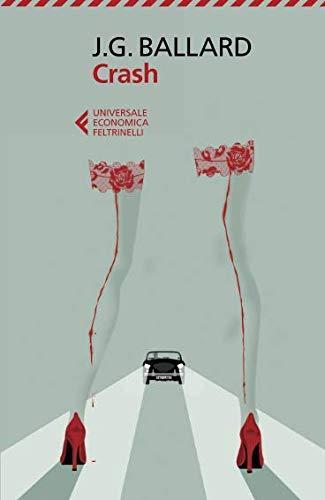
Crash di J. G. Ballard
Crash is a novel by English author J. G. Ballard, first published in 1973 with cover designed by Bill Botten. …
Questo collegamento si apre in una finestra pop-up

Crash is a novel by English author J. G. Ballard, first published in 1973 with cover designed by Bill Botten. …
The TV show was about freedom and the willpower of people who want to gain back their loved ones at all costs, confined in a theocratic dystopia. I was expecting the same here.
Instead. The book does not talk about freedom in an oppressive society, it talks about seeking desires in a world where they are prevented. Offred wants sex, love, a child. She is haunted by memories of the time when she was independent, but she doesn't believe it is possible to escape from Gilead. Even Ofglen isn't able to make a dissident out of her, Offred just turns her back to politics innuendo once she is satisfied with staying with Nick. Even when she is arrested at the end, it is clear that it has nothing to do with politics and subversives.
I probably prefer the Offred shown in the series, committed to find her daughter and to …
The TV show was about freedom and the willpower of people who want to gain back their loved ones at all costs, confined in a theocratic dystopia. I was expecting the same here.
Instead. The book does not talk about freedom in an oppressive society, it talks about seeking desires in a world where they are prevented. Offred wants sex, love, a child. She is haunted by memories of the time when she was independent, but she doesn't believe it is possible to escape from Gilead. Even Ofglen isn't able to make a dissident out of her, Offred just turns her back to politics innuendo once she is satisfied with staying with Nick. Even when she is arrested at the end, it is clear that it has nothing to do with politics and subversives.
I probably prefer the Offred shown in the series, committed to find her daughter and to save her more than to find pleasure, which still I find perfectly justifiable.
The historical notes are just genius, a self-analysis by the book, utterly consistent.
People complaining about the absence of quotation marks: fuck you.
Fresh off her adventures in the pages of Princeless, Raven is ready to set out …
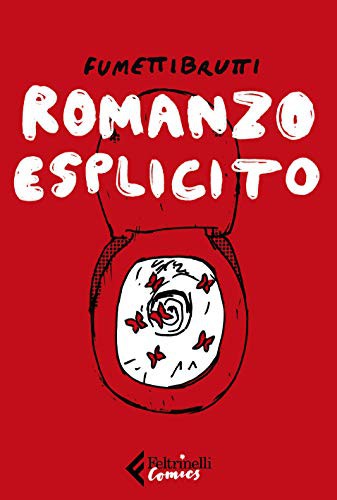
This is bad. Art just in the average, story uninteresting and utterly not credible even in this non-historical mid-fantasy world, characters whose only personality trait is their sexuality.
I cant see why people here love it so much. Not true, I see it. Every line is a joke about men or patriarchy. I'm usually the one who's mocked for being too feminist, I'm so inclined to meme and stuff. But this is not funny, this is not subtle or sagacious, this is blatant and stupid. Also inclusion at every cost, even at the cost of consistency.
Why do I always waste my time with garbage once in three serious readings? Don't judge me, my friends, it is just a slip
She is a good character, but what the fuck the copy-and-pasted panels? Same facial expression in a whole scene, kinda boring... Also, clients never stop talking... why? I'm not willing to read four pages of background of characters that in twelve pages are gone.
A knife between my ribs would be less painful than reading this utterly fragile and heart-breaking manga

Le Tre Leggi della Robotica:
1.Un robot non può recar danno a un essere umano, né permettere che, a causa …
Not my kind of short novel, I hated the pessimistic moral of the story, I hated the machismo and the useless Juana.
But there are a few scenes that are magic. In particular the first chapter and the two parts where Kino looks in the pearl and sees the future his family could have if he sold it. When his dreams dissolve, it broke my heart

"Bartleby, the Scrivener: A Story of Wall Street" is a short story by the American writer Herman Melville, first serialized …
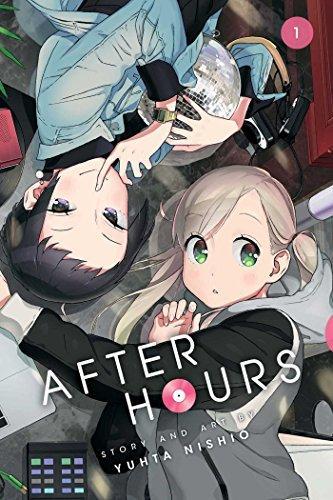
I have kind of a problem with a lot of manga series I randomly pick up and read.
At first I think their essential design is awesome and so unlike all the popular manga I've read, few lines, few colours, absence of background...
Then after a bunch of episodes I begin to notice that the comic is becoming more complex and detailed. BUT I LIKED IT THE WAY IT WAS BEFORE.
Man... I've come to the conclusion that when they have a little success and they also gain a studio with slave-artists that do the job of the author, it's time to drop the series. I'm so hipster that I read only the first few issues and then I toss the comic off the window