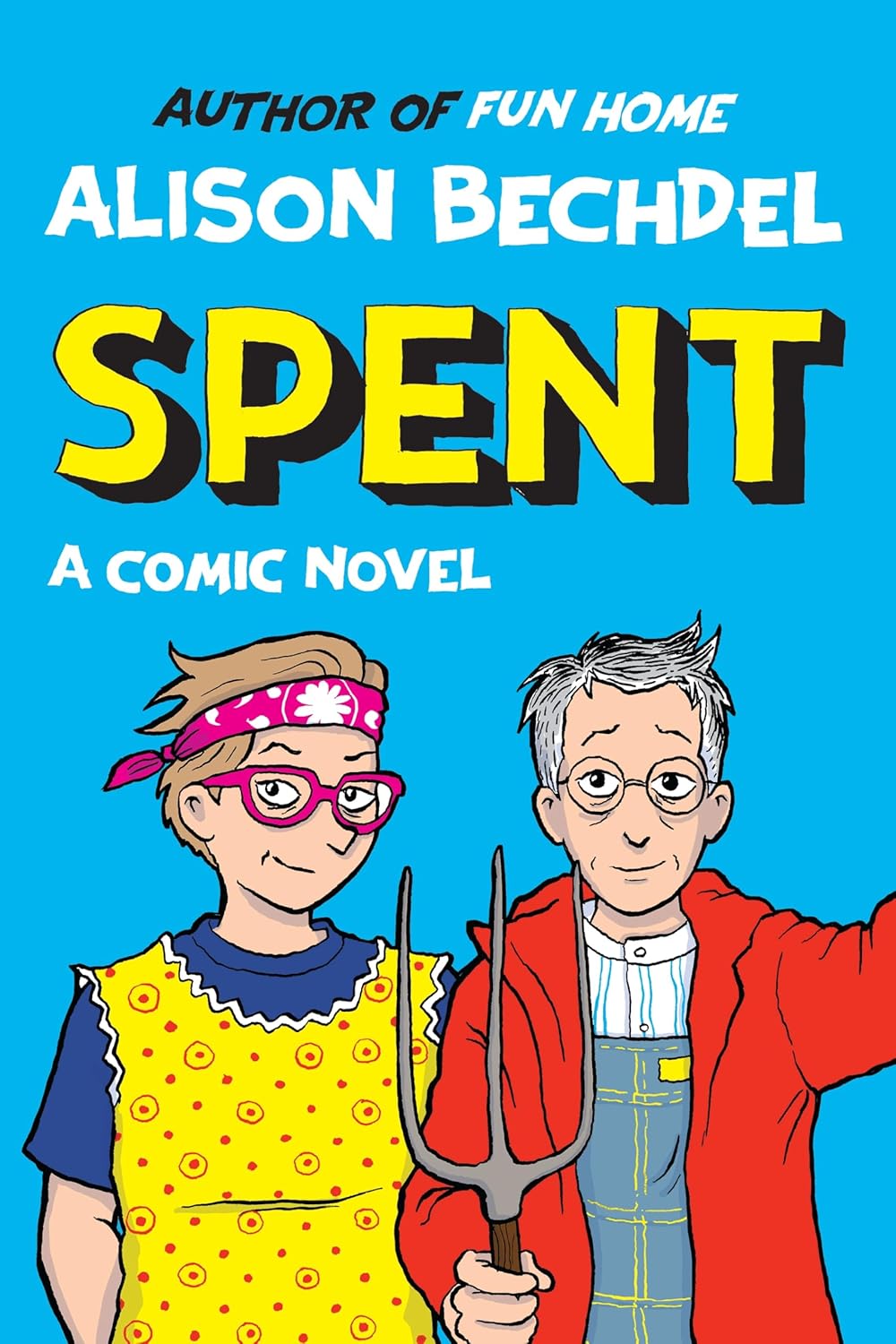

ralentina ha recensito Spent di Alison Bechdel
Like a sweet friend reunion, with a hint of bitter
4 stelle
When I came out, I devoured Dykes to Watch Out For, in the edited volume I bought in preparations my very first lesbian book club. I fell in love with the characters and wished my life was more like theirs. I, too, wanted to hand out with lesbians (of which I knew none) and kiss hot people to make a statement at political demonstrations. Which is to say, these dykes were, despite all their flaws, kind of role models. What a weird experience, then, to be able to follow your heroines into middle-age, having settled down in Vermont and made compromises, big and small, with 'the man'.
I related in many ways, I enjoyed most of the story-lines, and laughed out loud many times. And yet, of all of Bechdel's book, this one is perhaps the weakest? If I try to pin down the issue, I think that the …
When I came out, I devoured Dykes to Watch Out For, in the edited volume I bought in preparations my very first lesbian book club. I fell in love with the characters and wished my life was more like theirs. I, too, wanted to hand out with lesbians (of which I knew none) and kiss hot people to make a statement at political demonstrations. Which is to say, these dykes were, despite all their flaws, kind of role models. What a weird experience, then, to be able to follow your heroines into middle-age, having settled down in Vermont and made compromises, big and small, with 'the man'.
I related in many ways, I enjoyed most of the story-lines, and laughed out loud many times. And yet, of all of Bechdel's book, this one is perhaps the weakest? If I try to pin down the issue, I think that the format that works so well in the strips, is hard to put into a book with an overarching narrative. Bechdel has tried through the themes of 'our relationship with money' / 'how to live ethically in a capitalist word' (unclear which one). But I'm not sure whether she has managed to say anything insightful about it.
I could just accept that the book is meant to be funny, and it is. Why be snobs? But then I wish she hadn't framed it around Marx's Capital, whilst engaging with Marx precisely zero. By contrast, for the two books she wrote inspired by literature and psychoanalysis, she clearly went into a very deep dive and took those writers and theorists very seriously. I cannot help but feeling that here's a metaphor about queers today: plenty of psychoanalysis, some performative claims about socialism, but no one bothers with actually finding out what Marx (or other socialists) actually have to say about capitalism.